Ocean Strategies is a public affairs firm specializing in seafood, fisheries and marine resources.
This report provides timely policy and industry updates for those connecting sectors across the seafood supply chain to aquaculture policy development. Sign up here.
How and why the marketplace is leading seafood’s policy narrative
From the American Seafood Competitiveness Act to a USDA Office of Seafood, Washington, D.C. has given us a rare seafood focus this spring. These developments arrive as the U.S. fishing industry marks 50 years under the Magnuson-Stevens Fishery Conservation and Management Act. In this, the industry finds itself hitting both a milestone and a pivot point, one that asks the question: what do we want the next 50 years to look like?

For decades, the central challenge was how to manage fish stocks sustainably. In many ways that work has been successful – many fish populations have been rebuilt or stabilized, and the United States is widely recognized as a global leader in science-based fisheries management.
That success, however, has revealed a new constraint.
Success on the water doesn’t always translate into success on land.
Across coastal communities, economic strain is increasing. Processing capacity is shrinking. Market conditions are volatile and, in many cases, deteriorating. At the same time, retail data shows seafood prices rising while demand declines. We are producing seafood that is sustainably harvested, but increasingly difficult to sell at scale.
Amid these challenges, there are clear signals of forward momentum. The establishment of a USDA Office of Seafood marks a meaningful shift to fully integrate seafood into the policies and systems that shape how food is produced, distributed, and consumed in the United States.
This is not just an administrative change. It is a reclassification of seafood within federal policy. At least that’s the hope.
What’s Changing: Signals of a New Policy Direction
As outlined in Ocean Strategies’ 2026 Policy Outlook, the next phase of seafood policy requires a fundamental shift: positioning seafood not only as a natural resource, but as a core component of the American food system.
Historically, fisheries policy has been dominated by the institutions and frameworks associated with federal fisheries management. As one longtime Washington, D.C. seafood policy leader told us in response to that report, fisheries are still “90% seen through the lens of MSA and NMFS.” That focus has been essential,, but it has also created an insular policy ecosystem—a community largely talking to itself—while broader conversations around food, trade, health, education and economic policy have moved forward without widespread seafood participation.
The next phase will be shaped by forces well beyond fisheries regulation:
- food policy
- trade and competitiveness
- infrastructure investment
- community health
- domestic market strategy.
One of the clearest signals is the introduction of the American Seafood Competitiveness Act. While framed as a financing and access bill, its implications are broader. By expanding eligibility for USDA programs and repositioning seafood within the federal food system architecture, it represents more than a new funding pathway. It is a category shift.
The new USDA Office of Seafood reinforces this shift. But its impact is not guaranteed. Without coordinated engagement from industry, this opportunity risks becoming fragmented and diluted before it delivers results.
Rewiring the Value Chain
A fundamental category shift will begin to rewire how value is created and captured across the seafood system.
Capital Access:
Expanding USDA financing and related programs opens new pathways for vessel investment, processing capacity, and working waterfronts. Access to capital is access to markets. Without it, even the most sustainably managed fisheries cannot fully participate in emerging opportunities, and competitive innovation remains an elusive goal for small and large operators.
Market Development: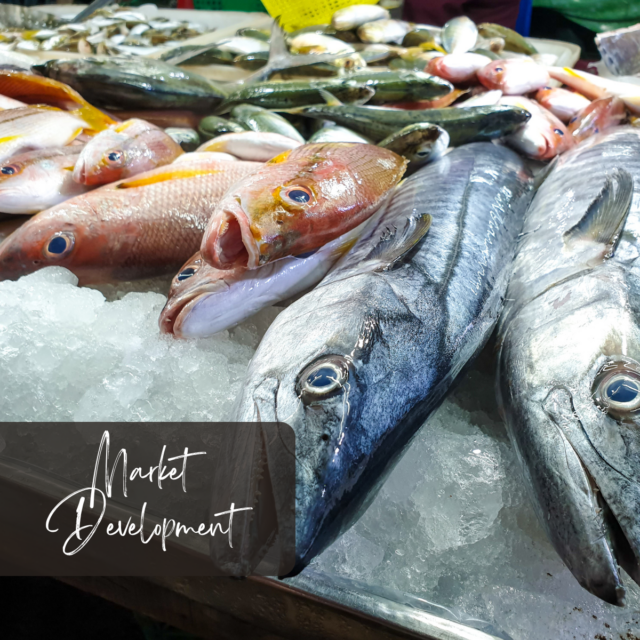
Seafood does not need to be reinvented, but it does need to compete. Rising prices are already suppressing demand, particularly in price-sensitive categories. As input costs, from fuel to logistics, continue to increase, those pressures are being passed on to consumers who are simultaneously pulling back spending. Expanding access to markets does not guarantee competitiveness within them.
Infrastructure: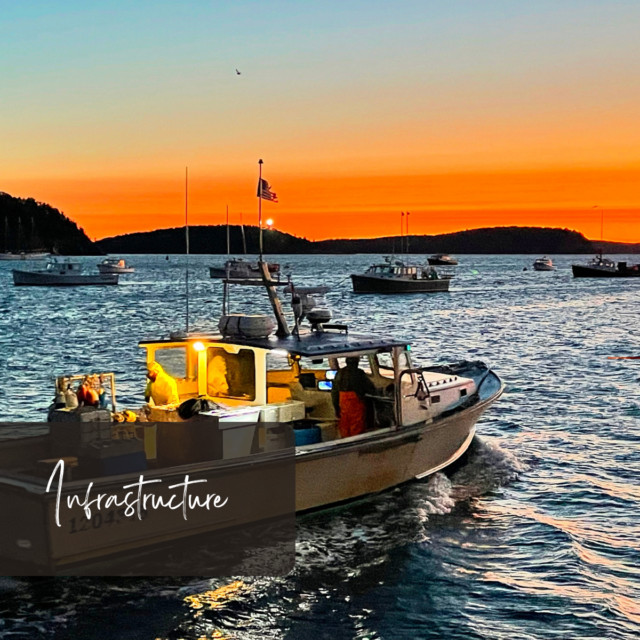
If boats are tractors and fish are crops, then docks, processors, cold storage, and logistics systems are the infrastructure that connect farm to table. And we have underbuilt nearly all of it. In some regions, processing capacity is already declining due to pressures outside of fisheries policy – increasing costs combined with increasing market volatility, and rampant consolidation – limiting the ability to land and move product regardless of stock health.
The current moment represents a transition. The first 50 years of U.S. fisheries policy were defined by building a world-class management system. The next phase will be defined by whether that system can support a competitive seafood economy, including the rural coastal economies where the majority of our harvesters live and work.
Where the Gaps Remain
Even as this category shift gains momentum, there’s a risk some of the same gaps and traps remain.
Expanding access to capital raises important questions about distributional outcomes. Market access is not neutral or naturally proportional. Who benefits from new financing opportunities, and under what conditions, will shape the future of the industry. Without intentional design, there is a risk that consolidation pressures could intensify, making it more difficult for independent operators to compete.
 What can we do? Build out emerging market tools with intention, prioritizing diversity of scale, geography, species and business strategy. Diversification can simultaneously be good business sense and good community sense.
Processing and distribution bottlenecks further complicate the picture. Capacity constraints, geographic challenges, labor shortages, and rising costs all limit the system’s ability to move product efficiently. Many of the most pressing challenges facing fishermen today—market access, infrastructure limitations, climate variability—fall outside the traditional scope of fisheries management. And again, access to markets does not automatically translate into competitiveness within them.
What can we do? Uplift research, development and technology. Some of the most exciting shifts in seafood right now are around tech-driven innovation, including quality preservation, automation at multiple supply chain stages, traceability, monitoring and more. Some of the same strategies that can increase value and sustainability can decrease costs if applied right.
One of the most persistent challenges is policy fragmentation. Federal seafood policy is distributed across multiple agencies without a unified market strategy. The result is a system where world-class fisheries management operates alongside a second-rate market framework.
There is a broader strategic tension between parity and potential. Much of the current policy conversation is focused on achieving parity between seafood and agriculture—ensuring that fishermen have access to the same programs and support systems as farmers. That parity is an important political goal. But it is only part of the story. The larger opportunity lies in positioning seafood within national priorities related to food security, public health, and economic development. Parity is the political strategy. Potential is the economic story.
What can we do? Make sure the Office of Seafood is just the beginning of seafood’s integration into broader top-line policy priorities: food systems, health, job creation and more. USDA inclusion doesn’t need to be a one-off partnership, it can be the start of smart, ongoing policy integration.
Looking Ahead: The Next Phase of Market Access Policy
The trajectory of this shift will depend on how several key policy areas evolve in the coming years.
Implementation of USDA programs—and the effectiveness of the Office of Seafood—will shape how access translates into real-world outcomes.
- Upcoming Farm Bill negotiations will play a central role in determining how seafood is integrated into long-term food system policy.
- Trade enforcement and competitiveness policy will influence the industry’s position in global markets.
- Infrastructure investment decisions will determine whether physical and logistical constraints are addressed.
- Coordination across agencies—including USDA, NOAA, USTR, and FDA—will be necessary to align strategy across what is currently a fragmented system
- And perhaps most importantly, engagement from industry and communities nationwide will determine how benefits and progress are distributed; across regions, fisheries, scales of operation and communities.
For stakeholders, these developments carry different implications. Fishermen may gain new access to financing and markets, but will also face new competitive dynamics. Processors will increasingly function as critical infrastructure, linking harvest to market. Policymakers will need to navigate cross-agency coordination challenges. Industry organizations and partners will play a key role in shaping how programs are implemented, while also helping to drive demand-building strategies and coalition development across sectors.
The core question facing the industry is no longer only whether we can catch fish sustainably – though that question remains. The next era questions whether we can sell it competitively, from the smallest operators to our largest, and where that will place us in both domestic and international markets.

American Seafood Competitiveness Act
Recently introduced federal legislation that would expand seafood industry access to USDA financing and development programs, helping place harvesters and processors on more equal footing with other domestic food producers.
USDA Office of Seafood
The recent creation of a dedicated Office of Seafood within USDA marks a tangible administrative step toward integrating seafood into federal food, agriculture, and procurement policy.
USDA Seafood Liaison and Program Expansion Efforts
Recent USDA engagement with the seafood sector, including the establishment of formal liaison capacity and expanded dialogue around seafood participation in agency programs, signals growing institutional attention to the industry.
Upcoming Farm Bill Reauthorization
The next Farm Bill is an active federal policy opportunity where seafood stakeholders are expected to pursue inclusion in nutrition, lending, market development, and rural infrastructure programs, as well as codification of the Office of Seafood.
Domestic Supply Chain and Infrastructure Priorities
Ongoing federal focus on domestic supply chains and critical infrastructure creates near-term opportunities for seafood-related investments in processing capacity, cold storage, ports, and working waterfront resilience.
Trade Enforcement and Competitiveness Agenda
Current federal emphasis on trade fairness, domestic production, and competitiveness is increasing policy attention on seafood imports, market distortions, and support for U.S. producers in global markets, amplifying other long-term priorities of the seafood sector.
- The Pacific Fishery Management Council approved the reopening of commercial salmon fishing off of California for the first time since 2022, citing rebounding salmon populations.
- Alaska Beacon reports warm waters in Alaska are causing algal toxins to turn up in new places in the food web.
- State of the Kelp Industry: A Decade in Review and the Road Ahead – This report from Greenwave looks at development and recommendations across seed production, farm production, and market landscape in both the US and Canada.
Read
ESP Advisors setting the bar with a succinct yet eloquent glance at MSA’s 50th. If you like geeking out to ocean and coastal federal policy news, stay on top of it by signing up for their Substack.
Watch
A beautiful and sobering capture of the Mississippi Gulf Coast commercial fishing industry from the Mississippi State Extension’s ongoing Farm Week video series. Their conclusion of “The Fisherfolk—Hungriest State”, an episode specifically on the state of commercial fishing in the “most insecure food state in the nation”.
Cook
The phenomenally busy Spring season has us craving easy dinners packed with flavor, nutrition, and (obviously) seafood. We ended up digging through our personal recipe archives for our family’s standby favorite. Enjoy this fabulous version of a Shrimp Banh Mi that reminds us all of an old Seattle International District most-adored haunt, Saigon Deli. IYKYK.

Looking for Work?
- Alaska Marine Community Coalition is hiring a Fisheries Program Manager AND a Program Coordinator.
- Maine Coast Fishermen’s Association is hiring a Fishing Engagement and Outreach (Manager or Director).
- ESP Advisors is hiring a Senior Policy Manager.

- May 3; Seattle Fishermen’s Memorial Annual Dedication; Seattle, Washington
- May 28; NOAA Fisheries public comment period closes regarding Aquaculture Opportunity Areas in Alaska State Waters. Learn more and submit a comment.
- August 24-28; Ocean Hack Week; Vancouver Island, Canada
- September 20-27; Climate Week NYC; New York, New York
Here is a list of links to our most recent policy reports. You are always able to find them on our Ocean Pulse Blog. If you’d like to receive them directly, just sign up here.